1. The Drill Rig: Where Development Begins
Every meter of advance starts at the face.
The drill rig is the machine that creates the opportunity for production. It establishes the pattern, prepares the blast, and sets the standard for what happens next. If the drilling is inaccurate, the blast suffers. If the blast suffers, cleaning becomes slower, support becomes harder, and the entire development cycle loses momentum.
That is why the drill rig is so much more than a hole-making machine. It is the first link in the chain of production.
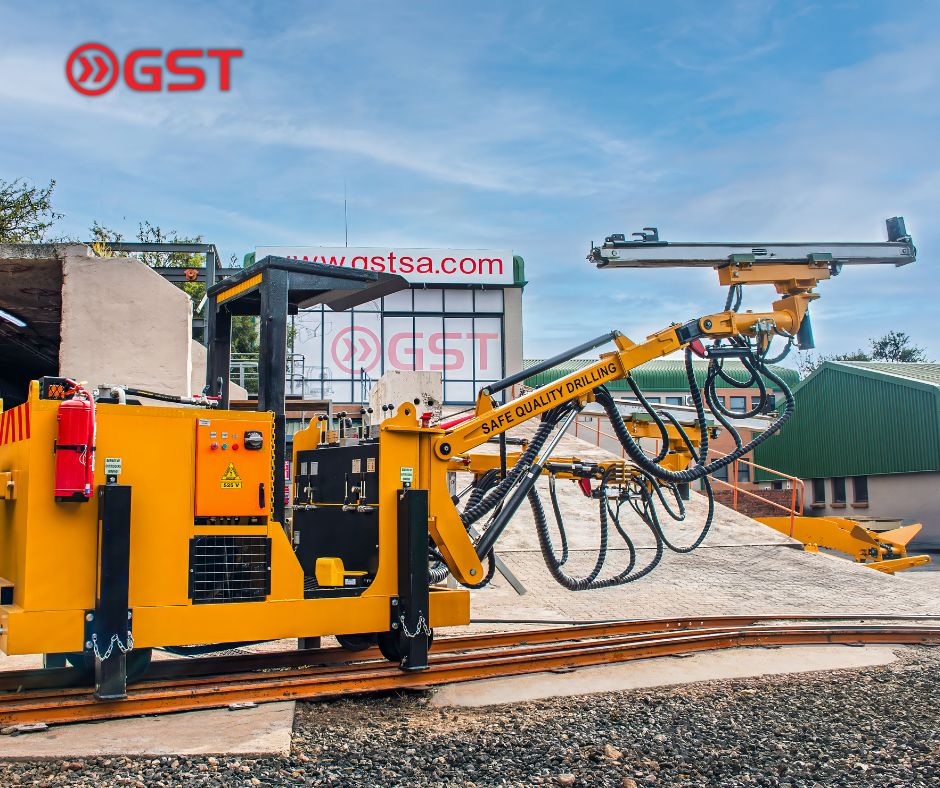
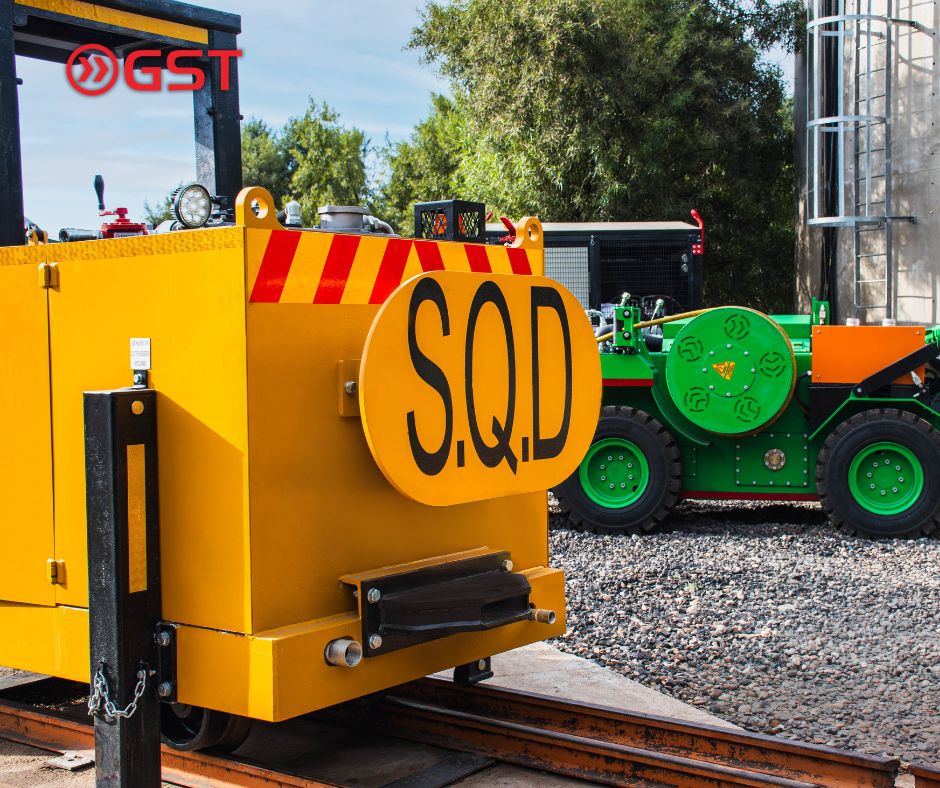
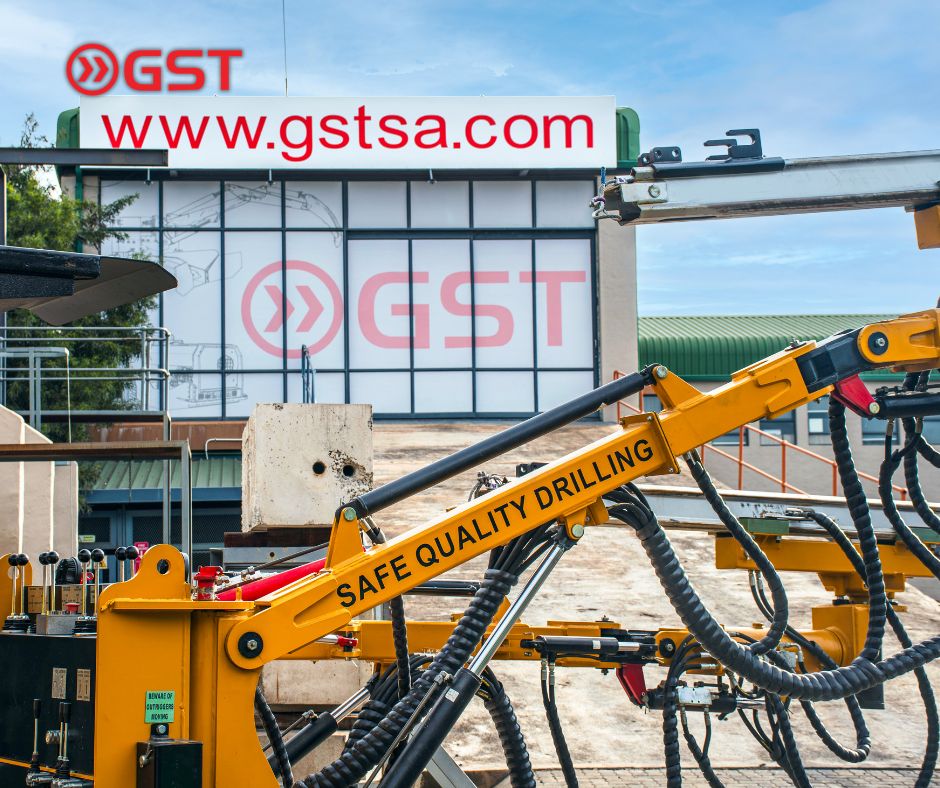
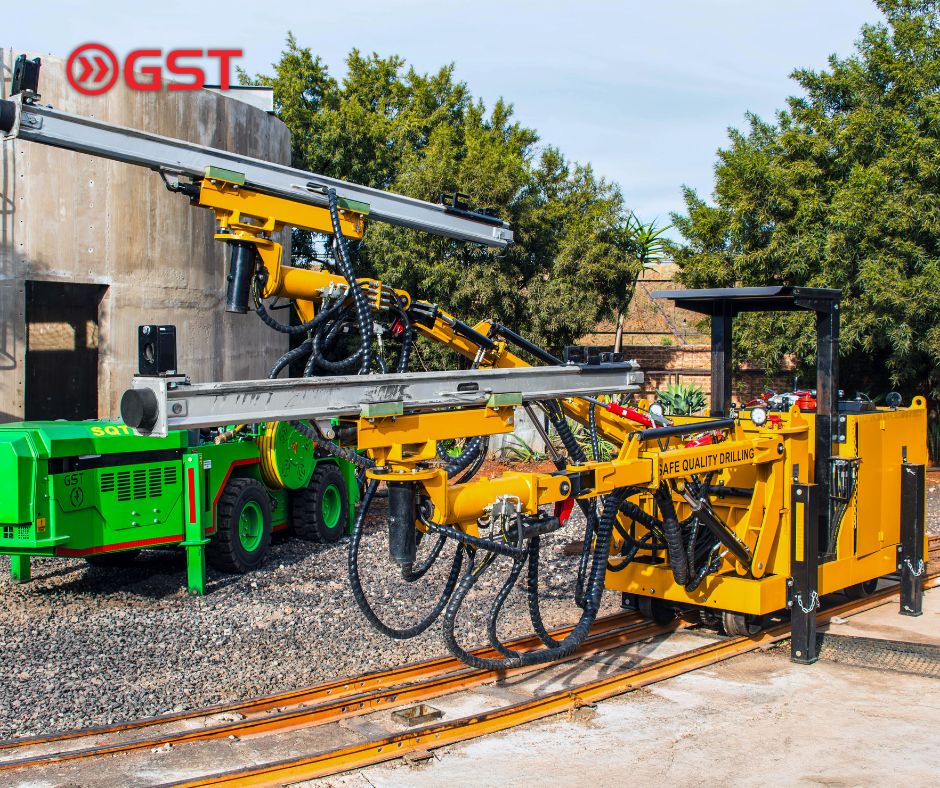
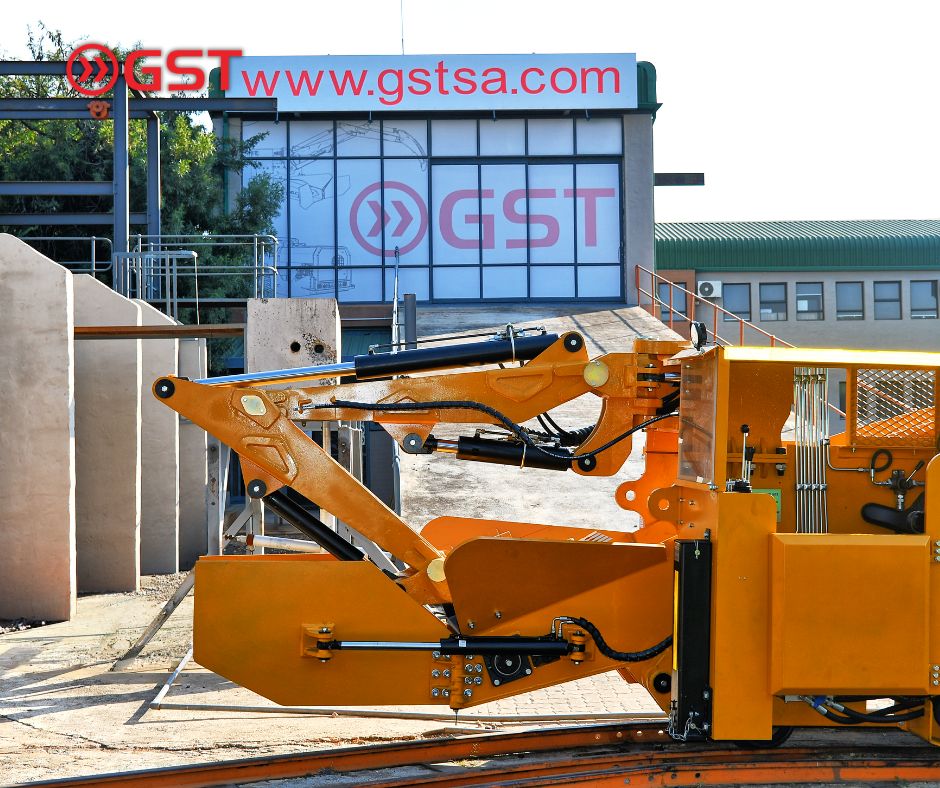
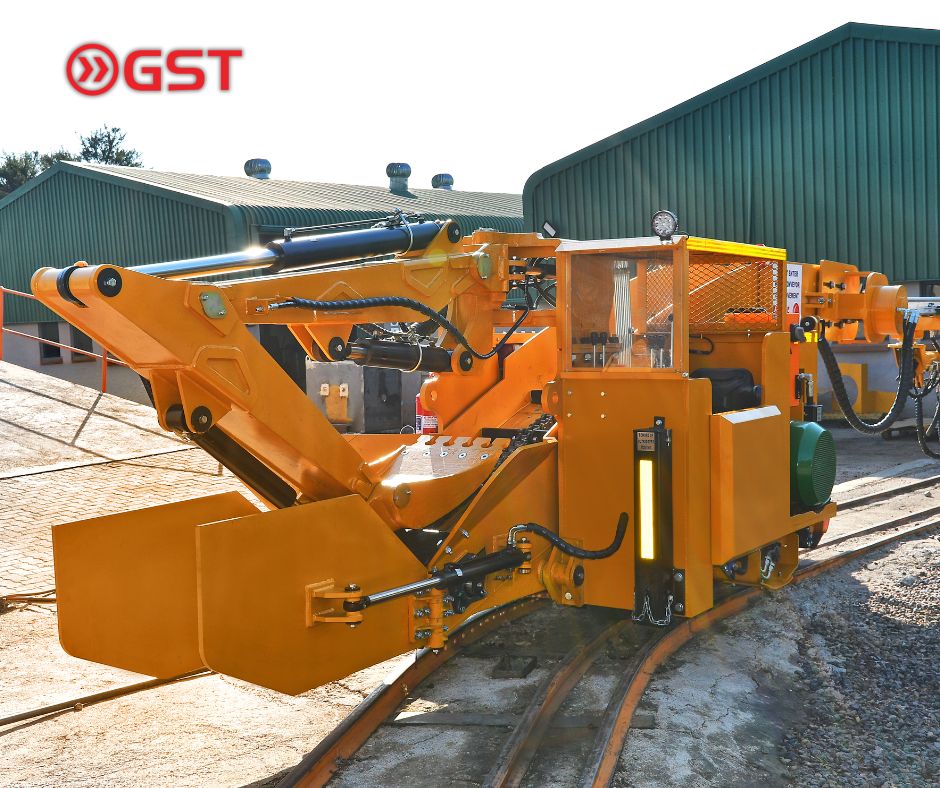
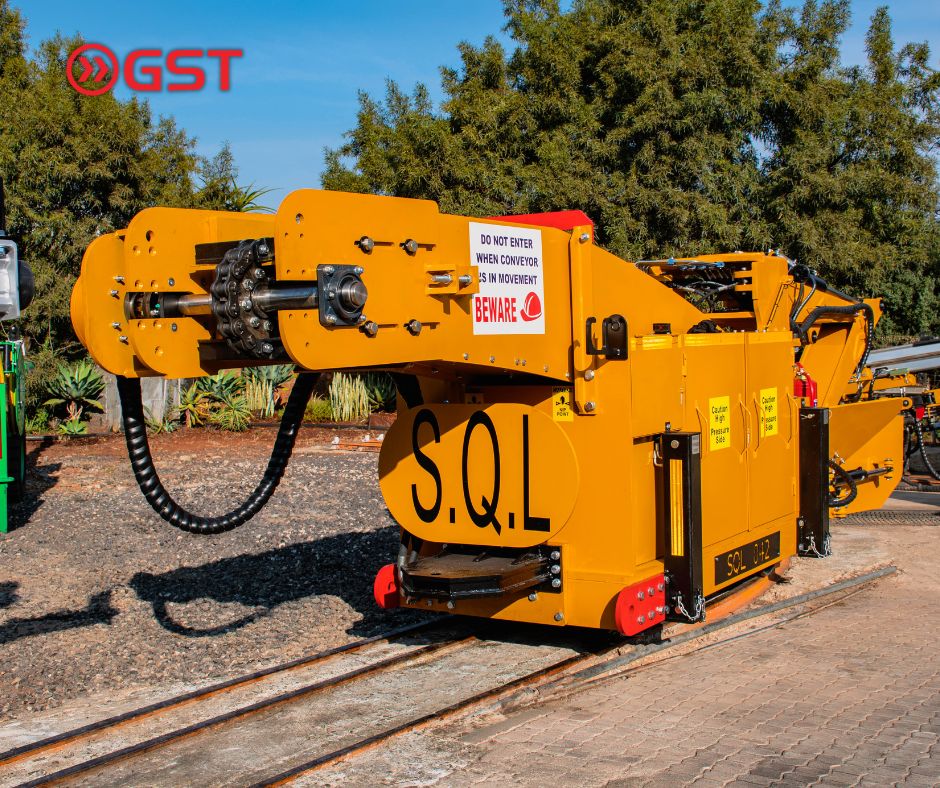
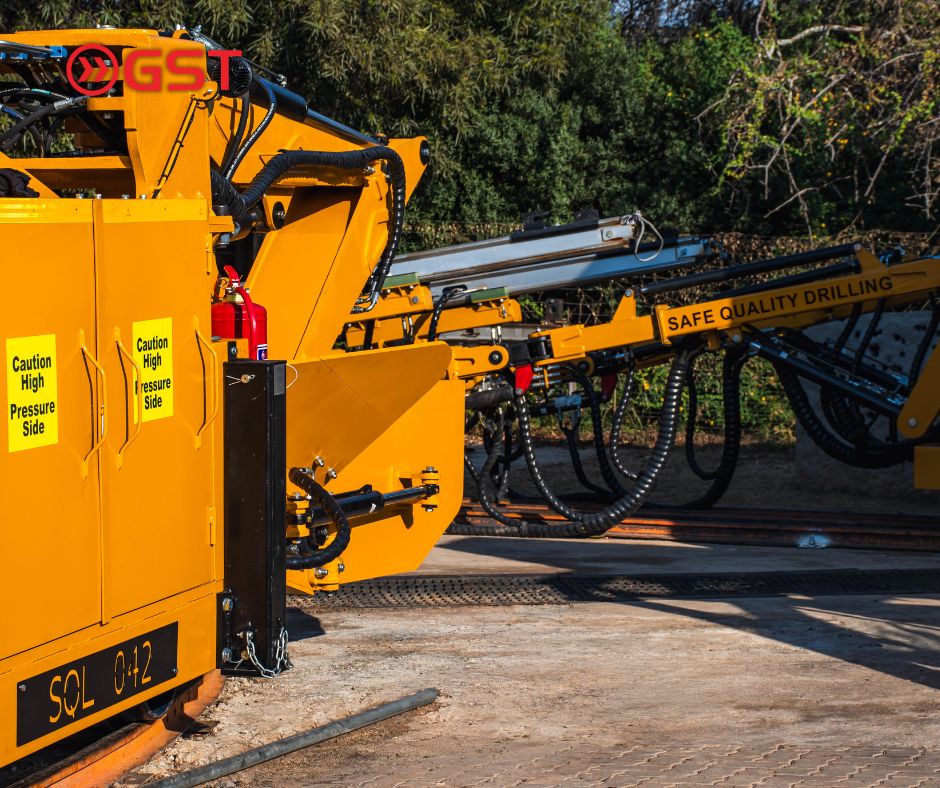
The GST SQD Rail-Bound Drill Rig is designed specifically for this role at the development end. Available in hydraulic or pneumatic configurations, it is used to drill support holes and blast holes with the accuracy and consistency underground operations depend on. Its rollover assembly allows drilling in multiple directions, giving crews the flexibility to work effectively in demanding underground conditions. The machine is also engineered around operator safety, with the operator positioned under a canopy and away from the face during drilling operations.
Good drilling creates more than holes in rock. It creates control.
It creates cleaner blasting patterns, better pull, more consistent breakage, and a heading that is easier to clean and prepare for support. In other words, a high-performing drill rig does not only influence the drilling phase; it influences everything that follows.
This is where many operations miss the bigger picture. They focus on meters drilled, penetration rates, or boom performance, but the real value of a drill rig is not only in how it drills. It is in how well it prepares the entire cycle for what comes next.
Because underground development is not won at one step. It is won in the handover between steps.